STORM CLEANUP
Storm Cleanup in Reno, NV and Northern Nevada
Storm cleanup in Reno for fallen limbs, damaged trees, scattered woody debris, blocked access, and tree-related cleanup after severe weather. Call today for a fast, free estimate.
- Licensed & Insured
- Locally Owned
- Serving Since 2016
Get Your Free Quote
By submitting this form, you agree to our Terms of Use including consent to receive calls regarding your free estimate.
Confidential · We respond within one business day
Home › Storm Cleanup
After a wind, snow, or other storm event, the visible debris is only part of the picture. Reno Tree Removal helps clear fallen material while also looking for broken limbs, split stems, partially supported branches, or damaged trees that could create another problem after the initial cleanup.
When you call about storm cleanup, start with the problem you are trying to solve rather than worrying about the exact service terminology. We will ask about the tree or work area, what changed, and what you want the property to look like when the job is finished.
Customers often call about storm cleanup because they know what is wrong but are not sure what kind of tree work will solve it. We can start with the visible concern, talk through the result you want, and separate essential work from optional improvements. That makes the estimate easier to compare and helps avoid paying for a broader scope than the property actually needs.
Storm Cleanup Should Address Damage, Not Just Debris
Most calls for storm cleanup begin with a practical property problem. You may want the work because something is unsafe, overgrown, damaged, in the way, or simply no longer fits how the property is being used. Common reasons customers contact Reno Tree Removal for storm cleanup include:
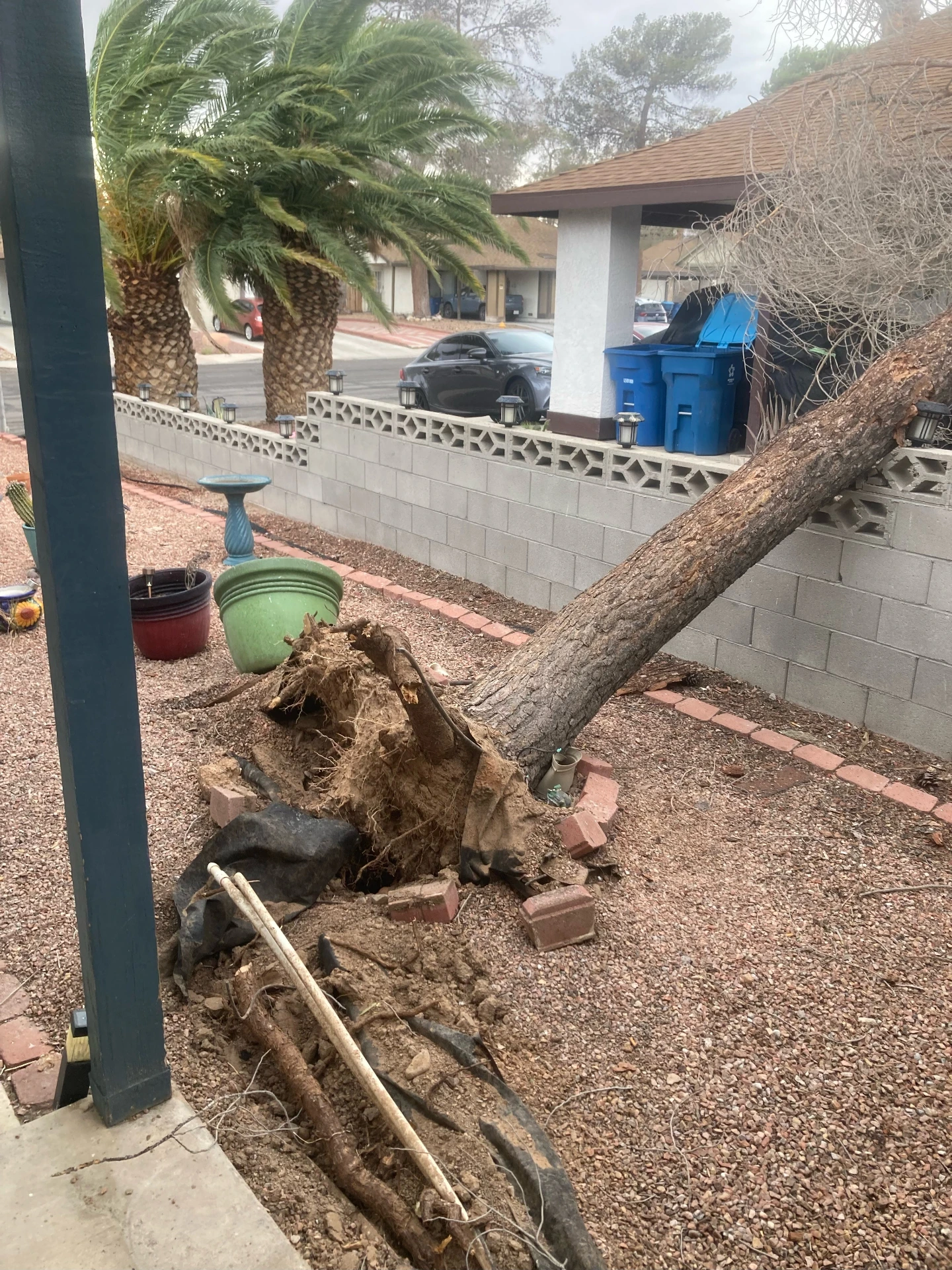
- Large limbs or whole trees have fallen into yards, roads, driveways, or parking areas
- Broken branches are still caught in the canopy or resting on other limbs
- A storm-damaged tree has a split, new lean, or exposed root plate that needs attention
- Brush and woody debris are scattered across a property beyond what normal cleanup can handle
- Access to a gate, driveway, building, or work area is blocked by tree material
- You need to separate urgent hazard work from ordinary cleanup and later tree maintenance
Not every item on this storm cleanup list leads to the same recommendation. We look at the complete situation and explain what level of work would actually address the problem, including whether a smaller or different service could be enough.
Two details that can change the recommendation for storm cleanup are whether Access to a gate, driveway, building, or work area is blocked by tree material, and whether You need to separate urgent hazard work from ordinary cleanup and later tree maintenance. Those are the kinds of differences we want to understand during an estimate. A situation that looks simple from one angle can have another practical concern, so we would rather look at the whole problem before telling you what service makes sense.
When to Call for Professional Storm Cleanup
The storm cleanup estimate is also where we look for site details that could affect the crew, equipment, or finished result. We pay particular attention to:
- what material is fully down versus hanging, lodged, or still under tension
- whether any damaged tree or limb is threatening a structure or occupied area
- the safest route for clearing access without pulling on unstable material
- how logs, brush, chips, and broken pieces should be handled
- which damaged trees should receive follow-up pruning, assessment, or removal after cleanup
These storm cleanup details matter to you because they affect access, production, property protection, debris handling, and the result you are buying. We explain the important constraints in plain language so the scope is clear without turning the estimate into a technical planning document.
We also pay attention to how logs, brush, chips, and broken pieces should be handled and which damaged trees should receive follow-up pruning, assessment, or removal after cleanup. For storm cleanup, those details can affect where the crew works, what needs to be protected, and how the finished area can reasonably be left. If either issue matters to another project you have planned, mention it during the estimate so the proposed scope supports what comes next.
What We Check Before Moving Fallen Material
Storm Cleanup is not defined by one machine or one production sequence. After we understand the customer goal, practical service options can include:
- clearing fully fallen limbs and woody debris
- removing hanging or unstable branches before general cleanup continues
- addressing a damaged tree during the same visit when the condition requires it
- returning for non-urgent pruning, stump work, or additional debris handling after immediate cleanup
With storm cleanup, Reno Tree Removal will tell you what is being proposed and what is outside the scope so the final condition is not a surprise. If an option meaningfully changes cleanup, access, or what remains, we point that out before scheduling.
For some storm cleanup projects, the choice comes down to how much work is necessary now versus what can remain for later. Options such as removing hanging or unstable branches before general cleanup continues can be compared with returning for non-urgent pruning, stump work, or additional debris handling after immediate cleanup when both fit the goal. We will explain what each choice changes so you are not approving a larger scope simply because it is the first one discussed.
Clearing Access and Handling Unstable Limbs Safely
When you first contact Reno Tree Removal about storm cleanup, photos can help if they can be taken safely, but the work is ultimately planned around the real site. During the estimate we confirm what material is fully down versus hanging, lodged, or still under tension, review whether any damaged tree or limb is threatening a structure or occupied area, and account for the safest route for clearing access without pulling on unstable material. We also ask what you want to protect, keep, remove, or change.
On a storm cleanup work day, the crew follows the approved scope and may adjust the sequence when conditions require a safer or more practical approach. A material change to the agreed result should be discussed rather than quietly turning into a different job.
When access is tight or other people use the site, storm cleanup also requires a clear work zone. We consider gates, walkways, parking, neighboring property, landscaping, and other features that could affect how material or equipment moves through the property.
Before the storm cleanup work day, we also make sure the plan accounts for how logs, brush, chips, and broken pieces should be handled and which damaged trees should receive follow-up pruning, assessment, or removal after cleanup. If the approved approach includes clearing fully fallen limbs and woody debris, we want that understood before the crew starts setting up. Clear expectations about the work zone, material movement, and cleanup help the job move efficiently without turning normal property features into last-minute surprises.
Follow-Up Tree Work After the Immediate Cleanup
Storm Cleanup can be a focused stand-alone service, but some properties have connected tree or vegetation needs. Reno Tree Removal looks at the whole work area without turning storm cleanup into a catch-all estimate.
With storm cleanup, the main request sometimes overlaps other work on the same property. If the situation also involves emergency tree removal, tree removal and hazardous tree removal, we can review those items during the same estimate while keeping each service clearly separated. For additional public background related to this type of tree or property work, the existing page resource link to OSHA tree-care safety guidance remains available.
For storm cleanup, tell us early if another contractor, utility, association, tenant, or project manager controls part of the site. Clear responsibility and access are especially important when tree work overlaps construction, energized infrastructure, shared property, or active commercial operations.
Keeping related work separate is especially useful when your main storm cleanup concern is that Large limbs or whole trees have fallen into yards, roads, driveways, or parking areas. We can price the work that directly addresses that concern and identify anything else as an option. If returning for non-urgent pruning, stump work, or additional debris handling after immediate cleanup becomes useful later, you will know how it relates without having to commit to it as part of the first scope.
Why Choose Reno Tree Removal for Storm Cleanup?
Reno Tree Removal provides storm cleanup with a simple standard: understand the customer’s problem, define the work clearly, and make the expected result easy to understand before production begins. For this service, customers can expect:
- A combined view of debris cleanup and the damaged trees that produced it
- Licensed and insured tree service for storm-related work
- Free estimates when the scope can be evaluated normally
- Clear separation between urgent hazards, debris removal, and optional follow-up work
- Related emergency removal, hazardous tree removal, and standard tree removal services
Reno Tree Removal is licensed and insured, and estimates for storm cleanup are free. If the most useful recommendation is different from what you first asked for, we explain why so you can compare the options with a clear picture of the work.
For storm cleanup, that means you can expect us to pay attention to A combined view of debris cleanup and the damaged trees that produced it, while also keeping Related emergency removal, hazardous tree removal, and standard tree removal services in view. Those points are specific to getting this kind of work right for the customer. The estimate is your opportunity to ask what is included, what alternatives exist, and what we expect the property to look like when the approved work is finished.
Frequently Asked Questions About Storm Cleanup
Should I start cutting storm-damaged branches myself?
Avoid branches that are hanging, bent under load, lodged in other trees, or near utilities. Storm damage can leave wood under unexpected tension, so keep people clear of questionable material.
Can you clear a driveway or access route first?
If blocked access is part of the job, tell us what needs to be reopened. We can plan the sequence around the immediate access problem and the condition of the material blocking it.
What if a damaged tree is still standing?
A standing tree can still need attention after a storm. We can look at broken tops, split unions, new lean, root movement, and other visible changes and discuss whether pruning, removal, or further assessment is appropriate.
Do you haul storm debris away?
Hauling, chipping, log handling, and cleanup depend on the approved scope. We explain what is included before work begins so there is no confusion about what remains on site.