
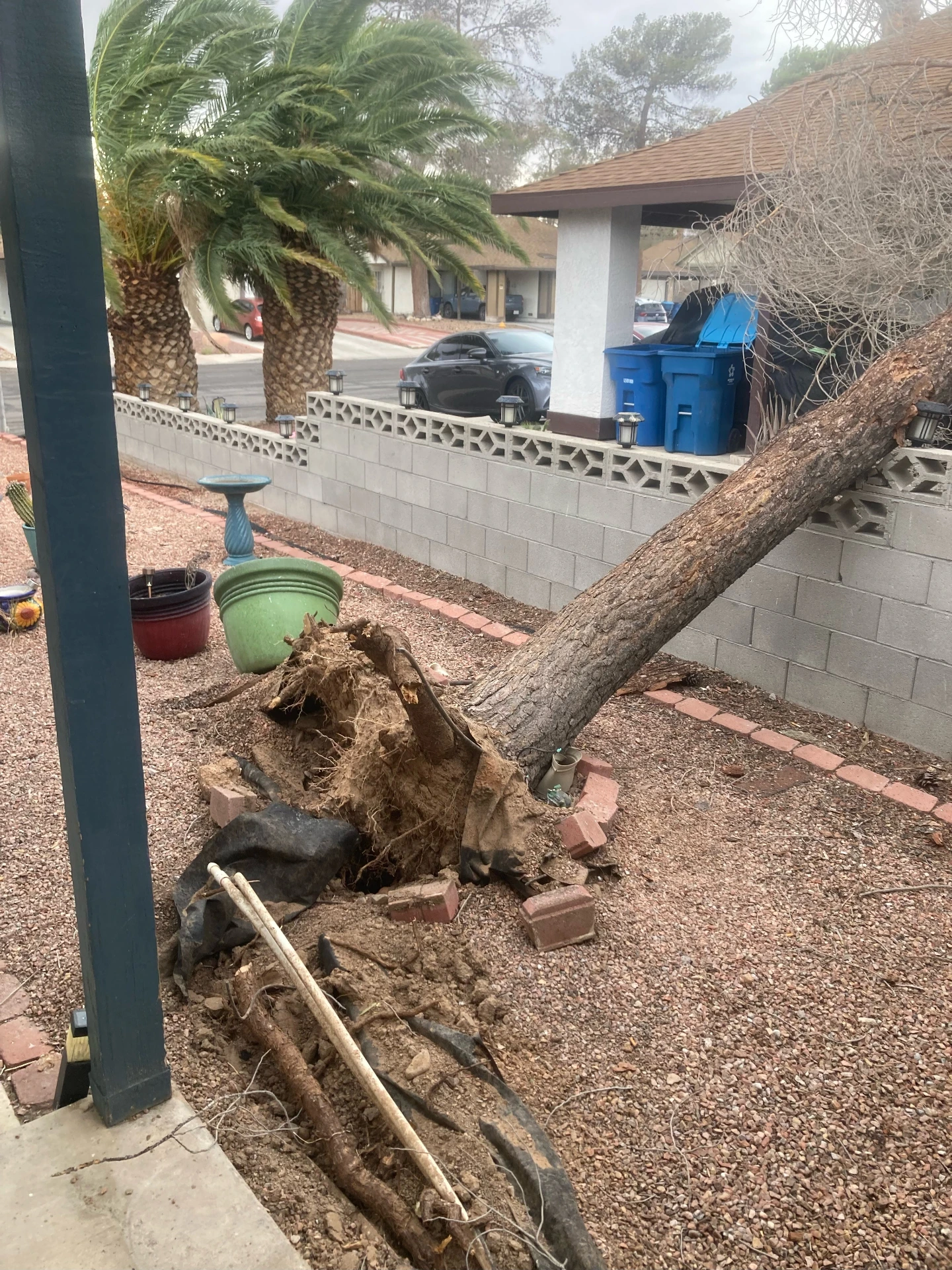
Emergency tree removal becomes a priority when damaged material is unstable and can affect people, structures, vehicles, utilities, or essential access. The key question is not whether the tree looks dramatic. It is whether something can move, fall, roll, split farther, or block a critical area before routine service can be scheduled.
Start with immediate danger
If a tree or large limb has failed, keep people out of the potential fall zone. Do not stand beneath hanging branches to take photos, cut a loaded limb from below, or use a vehicle to pull on a tree that is caught in another canopy. Wood under tension can release in an unexpected direction when a supporting branch or trunk section is cut.
Call emergency services when there is an immediate life-safety issue. If electrical conductors are involved, contact the utility and treat the area as energized until the utility says otherwise. Tree work should not begin simply because the branch is visible from the ground.
Broken limbs and split stems
Large broken limbs can remain attached by fibers, bark, or another branch even after the main fracture. Split co-dominant stems can continue opening under their own weight. A broken top may be lodged in the canopy with no stable connection to the trunk. These conditions are often more dangerous than material already resting flat on the ground.
An emergency tree removal plan commonly removes or stabilizes the material with the highest consequence first, then works back toward the remaining tree. Follow-up pruning or complete removal can be decided after the immediate instability is controlled.
Educational video: storm-damaged trees
Colorado State University Extension discusses storm damage and how to approach tree care after severe weather.
Root-plate movement and new lean
A tree that suddenly leans after wind or saturated soil deserves more caution than a tree that has grown at an angle for years. Look from a safe distance for lifted soil, exposed roots, cracking around the base, a newly opened gap at the root plate, or movement that was not present before the storm.
Root failure can be difficult to stabilize because the entire tree may move as one unit. Equipment position, escape routes, adjacent trees, buildings, slope, and crane access can all become part of the removal plan. A hazardous tree removal may therefore use a different approach from an ordinary open-site removal.
Power lines, roads, and blocked access
Storm damage near overhead power lines requires utility coordination. Do not touch branches, fences, vehicles, or equipment that may be contacting a conductor. Even a line that appears down or inactive should be treated as energized until the utility controls the hazard.
Blocked driveways and roads are also time-sensitive, but opening access should not create a new exposure. A trunk across a drive may be supporting a suspended crown or another tree. The cutting sequence needs to account for compression, tension, roll, and whatever is still holding the tree in place.
What to do while waiting for help
- Keep people, pets, and vehicles away from unstable material.
- Photograph the whole tree from a safe distance, not from beneath the canopy.
- Show nearby roofs, vehicles, fences, utilities, roads, or entrances.
- Tell us whether the tree moved suddenly, what weather occurred, and whether anything is still shifting.
- Identify the safest equipment access without walking through the fall zone.
If the damage is stable and no critical target is exposed, the work may be scheduled as storm cleanup instead of an immediate emergency. Our storm cleanup service separates ordinary debris processing from unstable tree work so the first priority is clear.
What happens after the emergency is controlled
Emergency service is often the first phase, not the entire property restoration. Once unstable material is removed, the remaining tree may need pruning or risk review. A removed tree may leave stump grinding. Roof, fence, irrigation, or landscape repairs may belong to other contractors. Logs and brush may need separate hauling if access was limited during the initial response.
The estimate should distinguish immediate hazard reduction from those later tasks. That keeps the emergency visit focused and gives the property owner a clear list of what remains after the site is safe to use again.