
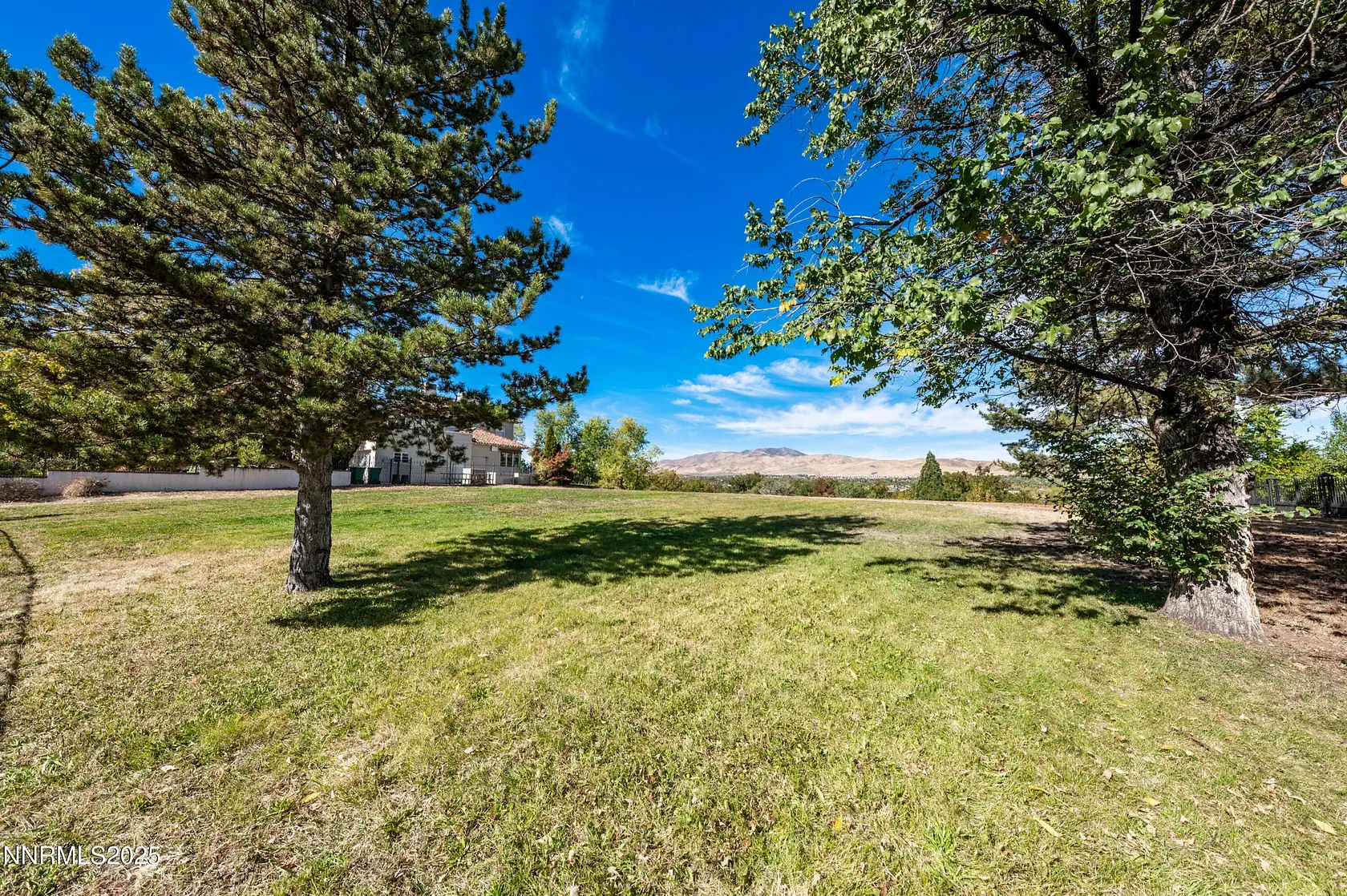
Seasonal tree care in Reno works best when the calendar follows what the tree is actually doing, not a generic list of monthly chores. High-desert heat, irrigation dependence, wind, winter snow, and rapid weather changes can expose different problems at different times of year.
Spring: inspect before growth accelerates
Spring is a useful time to walk the property and compare trees with how they looked before winter. Look for broken limbs, hanging branches, cracked unions, new lean, bark damage, sparse buds, dead twigs, and places where snow or wind changed the canopy. Check the root flare and soil around the trunk as well. Piled mulch, grade changes, standing water, or newly compacted soil can create problems that are easy to miss when attention stays only on the branches.
Pruning in spring should still have an objective. Dead or broken material may need prompt removal, while live pruning should be based on structure, clearance, or a specific canopy issue. A healthy branch does not become a good pruning candidate just because it can be reached.
Educational video: spring pruning basics
Utah State University Extension demonstrates basic pruning concepts that are useful when deciding which cuts have a purpose and which do not.
Summer: protect the root zone
Reno summers put attention on water and root-zone conditions. A tree in irrigated turf, a tree in a parking-lot island, and a mature tree on a dry lot do not experience the same soil moisture. Watch for wilting, scorched foliage, premature leaf drop, dieback, or sudden changes in vigor, but do not assume every symptom means the tree simply needs more water. Saturated soil and irrigation leaks can also stress roots.
Keep heavy equipment, repeated parking, and material storage out of important root areas when possible. Mulch can moderate soil temperature and moisture, but it should not be piled against the trunk. If construction, trenching, or hardscape work is planned, tree protection is more effective before roots are cut than after symptoms appear.
Fall: prepare for weather and fuels
Fall is a good time to clear accumulated dead material, inspect branches over roofs and access routes, and review trees that showed stress during summer. On properties near dry vegetation, this is also a practical time to look at brush continuity, ladder fuels, low dead limbs, and woody debris as part of defensible space or broader fire-mitigation planning.
Do not remove large amounts of healthy canopy simply because leaves are dropping. The useful work is condition-driven: deadwood, known defects, clearance, storm-damaged branches, or planned structural pruning. For fruit and ornamental trees, pruning timing can also affect flowering or fruiting, so species and objective matter.
Winter: respond to snow and wind
Snow loading and wind can reveal weak unions, overextended limbs, old wounds, and root problems. After a storm, inspect from a safe distance before walking beneath a damaged canopy. Hung limbs, split stems, uprooted root plates, or trees leaning into structures can remain unstable after the weather has passed.
If a failure blocks access or threatens a structure, treat it as an emergency tree removal question first and a routine pruning question second. Keep people and vehicles outside the potential fall zone and avoid pulling on suspended branches.
How pruning timing changes by objective
There is no single best pruning date for every tree. Deadwood can often be identified and removed when needed. Structural pruning on young trees, reduction on mature trees, fruit-tree pruning, and work intended to avoid a particular pest or disease may have different timing considerations. The amount of live canopy removed also matters, especially on stressed trees.
The better question is: what are we trying to accomplish? If the goal is roof clearance, deadwood removal, structure, size management, or repair after damage, that objective should drive the cuts. Our tree pruning service is planned around retained structure rather than a fixed percentage of canopy removal.
Build a practical annual tree-care plan
For most properties, an annual plan does not need to be complicated. Keep irrigation and the root zone functioning, watch for meaningful changes, address broken or hazardous material promptly, and schedule pruning for a defined reason. Larger properties may benefit from grouping work by priority so urgent defects, routine clearance, young-tree training, and removals are not all treated as the same task.